Saturday, April 28, 2018

The Diabolic Choice S. J. Kincaid has Made

            Oh yes.
            We’re already about halfway through this book since we began this week (I’m on page 250) and I already am getting a sense of disappointment out of this book. See if this week wasn’t abnormal with pickups for my family, I did have a big fat theater thing due and I didn’t get sucked into Another or Kill la Kill (Another is the worse of the two, let me tell you that; people slipping down stairs and impaling their necks with umbrellas) I might have finished this book and have been able to write a review concerning all of my feeling; since I failed to do so, let me dish out the strongest, most significant one right now so I don’t have to talk about its abomination in the review.
            Sidonia sucks. She’s the innocent sweet little lamb that’s about to get sacrificed by Kincaid to better character development but it sure as heck took a long time for her to die. And spoiler alert, (because I wanted to see what type of hell hole I was digging myself into) she’s not dead. Son of a Shakespeare Sidonia, I detest your character so just die. It her specific character type that I’m not a fan of: the weak and innocent that screws everything up but is still a big component to the plot/protagonist. Innocent/sweet character are good, they balance out all the super fierce and brave characters. The problem is the sweetness is too high a concentration in her character, so I don’t care about her and you can pretty much tell super early on she’s going to die for character development. So when you have this character that’s too sweet and is going to die I’m not going to get attached to her (her background development was also minimal and I can’t see her as anything other than a plot device) so yes, I don’t give jack for Sidonia.
            Sidonia's one redeeming quality: being a plot device. Sidonia is there to make Nemesis care at first (check), she forces her into a new and dangerous environment (check), she’s there to leave her behind and absolutely crushed about the one thing precious to her being obliterated (check), she’s there to creates a down moment and sadly lead into the romance (check), and her demise is to eventually lead Nemesis to discovering a new purpose in remembrance of her name (check). The she freaking comes back to life. *Makes exaggerated disgust face.* Use your plot devices correctly Kincaid, I know I might be one of a kind on my disgust to Sidonia, but don’t kill someone to make character development and then bring back for more character development and a chance to destroy your main character twice and have a plot twist. Only do that in anime Kincaid (that doesn’t make sense on a regular basis so it’s okay to do something nonsensical), and what I have in front of me is not anime or even anime in any way.
            But I digress, I’ll enjoy the book until Sidonia comes back and the romance gets intense, but so far her existence has been my greatest grievance. One other thing, if you’re going to kill off so many characters would you please kill them creatively? Don’t just have people get stabbed and torn up limb for limb or blown up; have them get crushed in elevators, die of heart attacks, stab themselves (in the neck) out of insanity, or even be out swimming and get run over by a boat so their body gets chopped up into several pieces. There are so many safe things in the world that you can use to kill people with so if characters are going to drop like flies make it interesting and scar some people for life while you’re at it (like me, whose scared of stairs and umbrellas) so I can actually care more about this book. I apologize if that sounds callous of me, but this is what I get for cutting myself off from people a lot and watching Another yesterday (scarred for life I tell you). Aside from that, see you in the review hopefully next week!

Friday, April 20, 2018

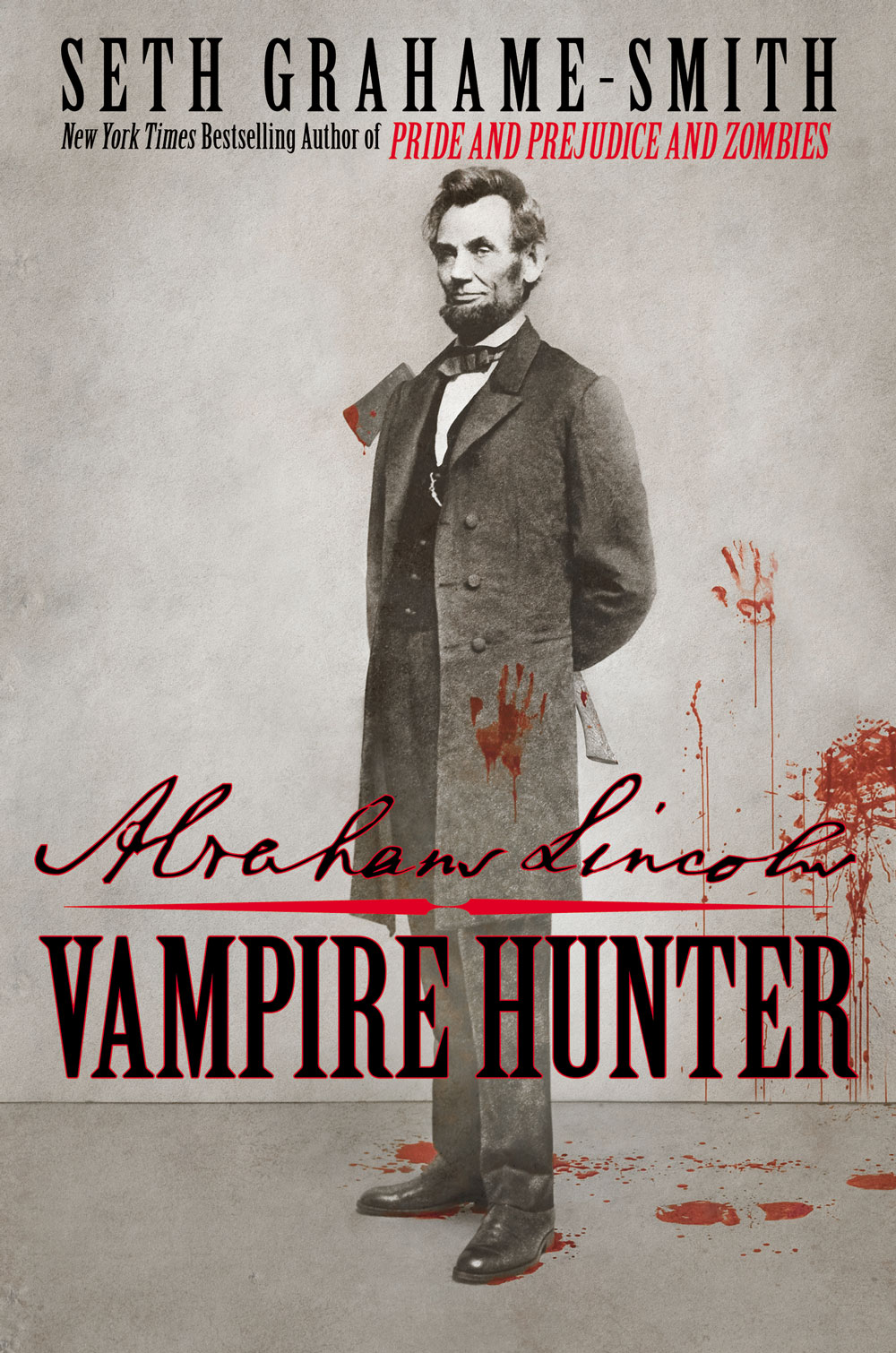
Abraham Lincoln Vampire Hunter by Seth Grahame-Smith (Review)


Date Finished: April 20, 2018
Page count: 336
Genre: Historical Fantasy
 
            I’ve lived in the United States of America my entire life and have endured it without knowing the truth about one of our most famous presidents. The strife he underwent, the misery he felt, (almost) all his suffering, happiness, and troubles finally brought to the surface in Seth Grahame-Smith’s (let’s call him G-Smith for now on) book and it was a whole lot better than the movie. I think. See, I haven’t actually seen the movie but
            I think. The movie seems way edgier than the book and while I’d probably see it as an good adaptation in its own right, I feel like it might skip over all the juicy character development that I really love about the book for edgy, edgy, melancholy Abe and vampires. Just look at this trailer! Is it CGI or live action, historical fantasy or edge lord of all the edge lords?
 
            Aside from that, this book was amazing. Sadly my review for it won’t be as long and in depth about it like other book due to it being historical fantasy (say that’s not a real genre if you will but I say it is because of all the vampires) and lots of the stuff that happened is historical and what do I do with that, review the actions of people who have once passed and judge whether they did something smart or not? Heck no, that’d be a WHAP essay and I am not writing one of those unless I have to. But yeah, with the few fictional elements and authors craft here’s my two cents on Abraham Lincoln Vampire Hunter (the book).
            Abraham was a well fleshed out character for starters. While he’s probably the only character other than Mary (his wife), or Henry (his vampire mentor that was probably a real person) and I usually feel that main characters are often lacking in the No. 1 developed/best character in the books I read (back stories to side characters are just more diverse and interesting) Abe was truly my favorite character in the book. We start with him from day one, see him live in a log cabin and cut tree with his oh so famous axe, and fudge he’s killing vampires now. This transition was not jarring or uncharacteristic of the image we all hold of Abe in our imaginations, as G-Smith write Abe in a way that’s familiar (but probably inaccurate) to us. He was a man of honor, a man of nobility, a man who recognized the true meaning of the US constitution and vowed to uphold that, even if it meant going again half the Union and a heck of a lot of Vampires. We saw him happy, we saw him depressed, we saw him grapple with his purpose and the horrors of his situation. Abe would not expect disparity, he stayed true to the very end; a character I could truly root for to success even though I knew he’d soon be dead. In some ways he reminds me of Allen Walker from D. Gray-man but better and so much more interesting. The problem with Allen is I have no idea what he’s fighting for and his personality is bland as diluted apple juice to the point where it taste like (what I assume to be) oil and makes me want to vomit. Then there’s the Noah clan and God dang Nea and why in the world would you stop hunting Akuma and go on this Nea discovery trip while leaving all the cool characters from the order behind Allen? Hoo boy, I need to stop before I got back to D. Gray-man hell, the story progressively gets worse over time that I jokingly (but seriously) refer to the series as “D. Grade-man” now.
            Now for authors craft (gosh, I hardly ever talk about this), a real gem this time around and it kinda had to be since historical fantasy demands it. So for starters I really liked the introduction of the book which started with the author being greeted by Henry in the present day (of the book or whatever) and getting the assignment of writing the book. I found this oh so lovely as it’s quite clear that this book is a creation of the imagination (hence why I refer to this genre as historical fantasy) but the way G-Smith writes it makes it out to be a truth. Perhaps if this were a parallel universe this book would be truth suddenly brought to life and by the revelation of vampires to people we’d start to be at war with them (starting to sound like Hellsing here, makes me want to read it again.), but neither the less, I love how the story is made out to be real; it helps to keep in mind the historical part of this genre which can be easy to forget when we’re reading about Abe cutting down some vampires.
            Speaking of vampire hunting, I like how spaced out it was in this book, allowed for enough time for Abe’s character to be developed in the beginning, for us to see how Abe’s political career took shape, and for us to see what Abe was like around his loved ones and the effects of being a vampire hunter in his private life. The moments where he was vampire hunting were parts where there was an open opportunity in his busy life to do so, and the explicit parts were always there to push the plot forward, keep thing interesting, and develop character. It created a lovely homeostasis of sorts, something comfortable that I was able to roll with.
            Other cool things include the “historical” photographs of vampires and evidence pointing to them, the fact that most of the story was “quotations from Abe’s journal telling the things he experienced first person, Henry, the three section division of the book into boy Abe, vampire hunter Abe and president Abe, and that oh so wonderfully satisfying ending we got. I don’t want to spoil it but I love that this ended like history should have but with a twist that was all too fitting. I do wish it could have been elaborated though, was it like Attack on Titan with Eren? It’s okay though, I may want to know but can live without knowing (though I do so wish I knew what happened).
            Overall, I loved this book. Historical fiction is my jam, (high) fantasy is my jam, of course meshing them together is going to be my ultimate jam (even I like to think up historical fantasy stories in my head). There’s something enjoyable about the merging of historical events with fantasy elements as you know what happens but you also want to see what’s different and what kind of world the author has crafted with what they have and what they mix in. I recommend this book to all vampire lovers, to all historical fiction lovers and all fantasy loves, heck even nonfiction lovers. This book as great character development, lots of tasty side dishes, and a wonderful writing style that can’t help but drag you deep into the pits of procrastination on your homework but it’s okay because we finished reading the WHAP textbook it’s a real party pit. This version of Abraham Lincoln is sure to be enjoyable by all you kids who hate history class or learning or whatever because of the action so when you can say that about a historical fiction novel not about a big fat controversy or conspiracy or war or anything remotely interesting when put on TV (if it’s cool on TV it’s bound to be terrifying to a good amount of people if that were to happen in real life). That’s all I’ve got for now so peace out y’all. *Makes peace sign with fingers at computer screen but actually doesn’t because that’s weird.*

Saturday, April 14, 2018

Sacrifice by Cindy Pon (Review)

 
Date Finished: April 12, 2018
Page Count: 263
Genre: Fantasy
 
            Kai Sen is dead.
           
            I'm crying (but not really).
            ….
            I’ll never forgive you Pon.
           
            Seriously, you’re such a monster.
           
 
            It was still a great book though.


            Ah yes, the long anticipated review of the sequel to Cindy Pon’s Serpentine, so anticipated I couldn’t contain myself when reading and skipped ahead when I was only about 100 pages into the book and kinda picked up on Kai Sen’s death so this got really painful to read. But then Skybright (oh goody, I forgot Word doesn’t think her name is spelled correctly) kept sense him briefly on one hand so he might not actually be dead, but the way this book wrapped up made it seem like a finale (who even writes only two installments in a series? You do one or more alright? Two usually isn’t satisfying when you end things like this) with all the character arcs wrapping up, but there could still be stuff explored with Skybright seeing her new position and possibly Blossom, but what could even be done with the characters other than the reuniting of Skybright and Kai and Sky finally saying confessing her love for him which is stupid and not worth a story, but I really loved the relationship of Kai and Sky (oh my God, that rhymes) and it was good in this book to and screw Stone, but I NEED MORE PON! *cries.*
           
            If none of that made sense to you, please accept my apologies; I just finished standardized testing when typing this and don’t feel like doing anything (it’s a struggle to even type this) much less my WHAP homework after school. I have a lot of organized thoughts about what happened so sit back and star the orientalstep because I’m going to rant about characters and related plot point that were totally awesome and heartbreaking at the same time!! 


            First up we have Skybright, the main character (still) but different because about a week (more or less) has passed since the previous installment so what do you expect me to say? The girl is more comfortable in her scaly flesh and is a practical as ever till Kai “dies” and she goes to live in seclusion for four months but she has this thing with Stone now. Remember Stone (sounds weird since someone in my Chinese class has that name and I’m looking at him right now as I type this)? I might not have mentioned him because he was meddling and insignificant in the previous book, but he sure as hell isn’t now! He’s (大概) Skybright’s new love interest. *Inhales deeply* AAAAAAAHAHHHHUUUGH! HOW DARE YOU PON!! I supported Skybright and Kai (would the ship name be Kaibright?) and then you have to go and screw everything up and make Stone mortal and in love with Sky and have Sky lust for him as well?! The heck Pon! Then you rub salt in the wound by having Skybright come to the conclusion that she and Kai can never be together due to him now being head of the monetary (who fight against demons if you’re wondering why that’s a problem) so she builds a wall between them and only regrets it once he’s gone. ABSOLUTE GARBAGE PON!! Don’t get me wrong, the plot is good plot that you wouldn’t expect to happen (sounds like something I would do, not allow a happy ending) but I didn’t want that to happen Pon! A regular unhappy ending might have still been satisfying if you didn’t kill of the best character and open up the main character to be with the lesser match (not to be mistake for Stone having a weaker character than Kai)! Nice going!!! *Angrily stares a Pon through me computer screen.* But overall, Skybright was normal, I’m not too satisfied with where her character went and worst I can say is that she was boring in the beginning of the book and I didn’t care too greatly for her on her own (her character is special because of the relationships she holds).
            Now we have best character, Kai Sen! Sure, Kai Sen is one of the deadest characters (or is he) but he will forever remain one of the hottest and most interesting characters. Seriously, Pon’s descriptions of him were gorgeous and I really loved what she did with him in this book. Kai wasn’t just the guy who was Skybright’s love interest (in fact they didn’t interact too much in this book), he was the guy who had good intentions but wasn’t exactly he could follow through on them thus allowing him to have many mental struggles that I loved reading about. It also helped that where Kai was a lot of the action was happening so he by far the most interesting person in this book and I sat in uncomfortable anticipation, waiting for the next time we’d get to see him. Other than proving to be a great standalone character I feel like Kai truly stole the spotlight and could very well have the potential to go somewhere despite his death (sob). Don’t go toying with my emotions like that Pon, having Skybright think Kai’s alive and then not be sure, that makes me think there’s more in store for him, but when you close everything all nice and unhappy that’s basically killing all hope. But still, an adventure where Kai finds himself in the underworld and then tries to return to the surface could be awesome and explore the place in depth thus helping to flesh out the full world of Xia. What the heck, it’s unlikely that’ll happen so might as go write fan fiction on it (correction, I don’t have time to write fan fiction).
            Zhen Ni is the next character and my feelings towards her are similar to the ones I hold for Skybright: Zhen Ni was okay to have around and even interesting at some points, helping to progresses the story but overall, not one of my favorites. The girl got married to a demon but didn’t know it at first and ended up trapped in her new home with other demons including her new half-demon child that eats corpses (she did not birth the child by the way). Seeing Zhen Ni explore her home gave us insight into our antagonist better than if we were suddenly introduced to him at the end, but other than that I often found the story was at its lowest when told frrm Zhen Ni’s point of view. She just wasn’t a serpentine or magical monk running around fighting demons and when those two are your competitors (and have been written well might I add), yeah you’re going to lose the popularity contest. The relationship between Zhen Ni and Blossom was cute though even if it was only explored a bit and I feel like a short story could be written about that (especially when Blossom is older since she’s like Skybright being half-demonic yet different since she’s aware of what she is).
            Finally we have Stone. He was better in this book, more fleshed out in terms of character due to being stripped of his immortal status but the love triangle, my Lord that love triangle. It actually slightly existed in the first book but it got so much pointier in this book. *sigh* Look, it’s not that I’m 100% anti love triangle, but there are more polygons in the world than just triangles! Give me a love square, or hexagon, or pentagon, or nth-gon, just something other than a triangle! I hate hoe Stone seemed to do nothing but create romantic tension for Skybright, there is so much more that could have been done with his character without Sky always mentioning something romantic related when she observed him. I want to know more about Stone’s past and see him interact with more than his love interest (but only 6/7 hers) and green eyes Kai. I’m just disappointed. But I do appreciate Pon knocking Stone down a couple levels, it truly added to his character and actually peaked my interest in him as well as opened up his job for Skybright (which I’m still not truly happy about). Either way, he was handled well here.
 
            Overall, this was not the sequel I wanted. Was it still good? Yeah, it just isn’t as good as Serpentine. Was there stuff I would change? Yes. Absolutely. Need you even ask? I loved that Pon explored other characters so that we could see more than Skybright. In addition to her, Kai Sen and Zhen Ni were also narrating the story so that kept it interesting (but it’s slightly worrisome, seeing how Pon might have done it because she felt the story told form Skybright only would have been boring or Sky herself is rather boring in this book) and I loved that. The world of Xia was a bright and full of life as ever and I found myself engrossed in it quite a bit. The new demons were particularly interesting seeing how they were grotesque, deformed monsters that had human appearances unlike the ones form the first book. I even enjoyed the small interactions between Kai Sen and Zhen Ni as well as Kai Sen and Stone, and what the heck; Kai Sen was the best, hands down. I wish the characters weren’t so restricted in who they interacted with as the cast was relatively small in this book, not letting too many aspects of their characters be shown to my disappointment, and I feel like the balance between high fantasy and romance which further restricted their interactions. So don’t read this book if you want to remain in bliss of Kai Sen being alive and there still being hope of everyone having a happy ending (because here only Zhen Ni gets one). The writing here is beautiful, the fantasy intriguing and commendable and the characters can capture you’re eye, but man, the roman kills it (actually the collapsing caverns kills Kai which is a super depressing chapter) and everything is slightly off balance. If you still want to read this book read the first one before it as little will make sense in this book and it’s just better to see how the characters change from one book to the next (it’s been six months for most of these people) so go ahead read Serpentine! Otherwise, get lost. Lots of sad stuff happens in this book and while I’m all for not having happy ending all the time I draw the line when you kill my favorite as that’s just not cool. Even if you like Kai Sen and don’t want to read about him dying, still read this book as the Kai Sen action is awesome in this book. Okay, probably covered all possible aspects of who should read this book and why, described the character, yeah I think I’m done here (though this review does seem a bit unkempt but then again, have there been any that aren’t lately?), so 再见你们!
Bonus! some orientalstep for your listening pleasure:

Saturday, April 7, 2018

The Adventures of Huckleberry Finn by Mark Twain (Review)


Date Finished: April 6, 2017
Page Count: 232
Genre: Realistic Fiction


            Clarification! I actually read Mark Twain The Adventures of Huckleberry Finn with Related Readings from the Glencoe Literature Library (I don’t know how to arrange all the stuff, I just went down the book cover and it’s still doesn’t make a lick of sense) due to someone else having checked out the book when I first decided I’d start reading it (Monday) so that’s why there isn’t the normal 366 pages or whatever. Due to not being able to find a picture of the addition I read I’ve selected the “cover” for an adaption of Huck Finn that I will never review here so there’s no chance of me running into conflict if I read a Huck Finn spinoff and review It (I won’t). My older sister likes to say I haven’t read the actual Huck Finn since the thing I have is too short but screw her, I’m pretty sure this has all 43, painful chapters of old school, deep south, bad mouth language in it, so take that bro! I done read Huck Finn younger than you!! It made me miserable but so what!!!! *Sob.*
            Yeah, I’m going to make this short and sweet for you guys, this book was a struggle. Not because I hated the stereotypes and not because everyone was saying n***** all the time (even the black folks called themselves n******! Y’all just going to disparage you’re selves like that?), it was because of the language. Not even Huck’s language, although his wasn’t the most polished, it was Jim. Poor, abused, runaway Jim and his terrible, terrible, lack of knowledge on how language works made me want to throw this book at my good friend who sits next to me in English class whenever I was reading it or my English teacher what the heck, I could probably throw the book at anyone in my English class and feel little remorse about hurting them. The reason I didn’t throw the book as it wouldn’t bring me any benefit other than possibly releasing some of my anger and then I’d get it big trouble and my reputation would forever be tainted even more than this blog has done all school year but it’s a good thing I didn’t because now I can get a excellent grade for this week’s blog due plus a good grade for reading enough outside of class *coughcoughIreadthisinoneweekcough.* Where was I going with this paragraph? Oh yeah, young people shouldn’t read this book unless they absolutely have to or are overachievers with nothing better to do than kill brain cells time because the language is challenging, stuff gets boring with all of Huck’s descriptions and world building (don’t get wrong, I love world building, but the way Twain does it is very mundane) and Jim is enough to make a person cry (or seriously consider crying). I repeat, DO NOT READ UNLESS NECESSARY KIDS. Now to talk about all the fun metaphors and symbolism and what not I picked up on.
 
Huck Finn and Jim traveling along the Mississippi. I'm so sad because I accidentally made Huck look like Jay (from Ninjago) and it was accidental but I did it and I'm sad!! The coloring was fun though, it was fun to utilize crayons and water colors, but I do wish I used some thicker paper for the drawing.
            Holy sheet, a decent picture; it’s been way too long me. So, first lets point out the elephant in the room: little orphan boy (Huck’s drunk father actually dies pretty early on in the book but it’s not reveled till the very end) becomes friends with an old slave running away from his masters. White and black didn’t mix back in the time of slavery; you’d supposedly go to hell for that. Dang, the racism is strong with this one; good thing Twain lived back in the 19/20th century as this would not fly today (unless you want to consider… *glances off at current events* naw). But despite the highly unlikeliness of Huck and Jim’s friendship having existing in the past, I found it incredibly sweet to read. Huck was just looking to get away from the restrictions of society as well as his abusive father and Jim was looking for freedom. Huck’s young age made him more adaptable to change and he took Jim with him on his travels despite Jim having run away and Huck feeling as if it were wrong to take someone’s slave from them. I found the way they worked together to survive along the Mississippi, watching out for hostile people who would want to take Jim away, watching out for storms and stuff, *sigh* it was just beautiful. I was touched in chapter 15 when Huck tried to play a prank on Jim which deeply upset him due to Huck taking advantage of his dim nature when he was worried sick about him. Despite Huck not feeling sorry about it, it was nice to know he learned from his mistake and didn’t play anymore tricks on him after that. I also loved how Huck was upset that the king (or was it the duke?) sold Jim for $40 and made the decision to get Jim back even if it meant he was going to hell. Ah, genuine friendship, my favorite thing in novels.
            The you have Tom Sawyer, who could have guessed Twain’s other character would show his ugly mug in this book too and play a significant role. At first Tom was all “we’re going to be bandits and kill people, but not women” which alienated me big time, but then he showed up and did Huck a big favor which made me war up to his character. The biggest that made me like his character is how he reminds me of Yukari Yakumo. Yes the gap hag reminds me of one of the protagonists of America’s classic novels. One of the reoccurring things about Tom we see in later chapters when he accidently runs into Huck pretending to be him at his Aunt Sally’s is that he loves an adventure. The guy wanted to take the hard way to free Jim from his family because it’d be more of an adventure causing Huck and him to run around the house for months (or week, the timeline in the book is a bit fuzzy to me) stealing things, digging up the small shack that Jim stays in to give him candles to make pens out of and plates to write on (with his blood by the way), and even forging notes about thieves planning on stealing Jim causing a whole lot of trouble, including getting himself shot in the leg. What the heck does Yukari do? Whatever the hell she wants! She can manipulate boundaries for heaven’s sake! Who wouldn’t abuse that power in a wise way if they lived in a fantasy world for thousands of years? Half of Gensokyo’s incidents could be resolved real quick if Yukari wasn’t off sleeping on getting Reimu to do stuff for her instead so it’s obvious this chick would rather do things the fun, adventurous way that teaches people lesson like Tom (except for the lesson part). But because of this, “let’s do it the challenging way” attitude I found myself taking quite a liking to Tom near the end of the book (especially since I also like to take the hard way in many situations).
            Side characters were pretty typical, you’ve got the drunken dad who of course abuses his kid and tries to prevent him from becoming smarter than him and drinks himself to death, you’ve got the mom/aunt figures that get worried over all the littlest things and don’t want no harm to come to their babies, the pretty innocent t lamb that makes even the wildest of guys (looking at you Huck) soften at their naïve natures yet lovely womanly charms (bless you Miss Mary Jane), the swindlers who will do anything to get rich quick no matter who they hurt (I hated the duke and the king by the way, their schemes got tiresome and long I tell you), the young boys who search for convenient adventures, and the superstitious idiotic n****** that aren’t even see as human and are at the bottom of the social ladder. I’m assuming this was done on purpose by Twain to make a statement about American history before the civil war (assuming he wrote this pre-civil war, I have no idea nor intention of finding out) about the behavior patterns of different social classes and how prejudice they were towards colored folks in addition to being firmly cemented in their roles. Huck is the exception as he goes on this journey to escape society and discovers that there are some friends that are worth sticking with despite what negative things the world may say about them. But it’s more elaborate than that and I’ll admit some of this book went over my head due to the severe amounts of boring it was so don’t expect me to elaborate on that.
            So in a nutshell, The Adventures of Huckleberry Finn was a whole lot of lying (it was terrify how some of these characters would come up with a lie on the fly and just roll with it while feeling minimal regret), a whole lot of environment describing (it was so boring), a whole lot of scamming people, a whole lot of n******, a whole lot of eating, and a whole lot of boating. Somehow, I still enjoyed this book to a degree- *GASP* and would recommend it to someone of extreme reading skill, someone who is cultured, or someone who would like insight into the dirty past of America. We really shouldn’t pretend that all that stuff didn’t happen in the past, especially with people saying equality is nigh and stuff due to all the stuff that’s been legalized and is now tolerated more this decade. Crap, this decade is ending soon, I feel like an old hag. Any who, hope you enjoyed my super awesome artwork review and you can plan on getting the much anticipated review for Sacrifice by Cindy Pon coming up next week unless I die or something, since I plan to go to the library and finally get around to reading that after saying I would read it almost TWO MONTHS AGO. Way to go me, way to go. Alright, peace out y’all.

Friday, March 30, 2018

Escape from Camp 14: One Man's Remarkable Odyssey From North Korea to Freedom in the West by Blaine Harden (Review but it's more like a PSA if I'm Honest)


Date Finished: March 29, 2018
Page Count: 210
Genre: Biography/Nonfiction

            So since you noticed, yes this isn’t exactly what I’d call a review, it’s more of a PSA. Let’s be honest here, it can be rather challenging to review a nonfiction book unless you want to spend the duration of the review talking about the formatting of the book and what you learned. Ironically I’m going to do that, but the most, most important part of this review is going to be a PSA directed at you, you unknown internet surfing American/post about lots of stuff I learned from this book. Thank God this review won’t be as long as my last one (hopefully), but you shouldn’t skip over this review because it long or because it’s a nonfiction book. I promise you I will do my best to convince you to read this book or not. Alright then lets hop to it!
            Shin In Geun (now know as Shin Dong-hyuk) is the man of the hour and this book is about his life. It’s about more than just his life though, it’s about the life of those born and raised in North Korea’s worst prison camp and the challenges people who escape from the camp face when trying to assimilate into other societies. This is the story of current atrocities in our world that many people are blind to or barely bat an eye at because it’s not them, there no way this could be going on, why should we have to deal with the sheet storm called North Korea?
Before reading this book I was one of the people who would make jokes about North Korea watching us (the US) and I used to think Hitler was the most inhuman person to have ever walked the planet recently. How blind I was to the abusive thieves we have walking on our planet at this moment. I hate to say bas things about Elie Wiesel (and yes, I have read Night), but he got the better end of the stick back in WW2. This is one of the mind blowing things about this book, (and while I don’t remember when things were stated exactly) it pointed out how all that’s going on is worse in North Korea than the Holocaust as NK’s labor camps have existed twelve times as long as the Nazi concentration camps (and still exist today, just Google map it). “So what?” You say? Here’s the part where I get slightly biased; the Nazi camps were meant for killing, the NK ones are meant to punish.
            Despite what you believe the afterlife is going to be like, most people will agree that pain is not a fun experience and if torture is bad enough they’d kill themselves rather than have to experience prolonged misery. People who got sent to the Camp 14 have to endure long hours of labor while malnourished and often beaten up for failure and/or not meeting one’s quota. For those who went in suicide is a highly likely possibility. There was even a part in the book where Harden talked about how another defector once jumped down a mine shaft trying to kill himself and was then upset when he failed. That’s super messed up. You think it isn’t because some Jews also completed suicide? The scale of prisoners is far greater and the fact that the guards don’t want them to die should give you some indication that the intention isn’t mass murder, is mass labor in hell on earth. Don’t even get me started on the social structure of the camp.
            NK concentration camps don’t throw babies into fires, don’t gas women, and don’t get rid of the unhealthy workers immediately. Men and women are “give” to each other as rewards to try and have children in the camp as (with Camp 14 at least) the idea is to purify the criminals by at least three generations (the worst political enemies and stuff go to Camp 14). These kids are raised to be informers and alert their guards, or “teachers” as the kids grow up calling them, of anyone who might break the rules, even their own family. To them there is no love with family as there is no love allowed at camp. With the pressure to snitch and keep oneself from harm, it’s probably impossible to develop strong, positive emotions at another other than fragile trust when it isn’t even taught to them.
Speaking of taught, teaching there is horrible. Shin describes how he once watched his six-year old classmate get beat to death with a chalkboard pointer by the teacher. That was something normal at school, you work or get beaten till you can’t be beat anymore. NK has (had?) a population of about 23 million people; it can keep sending people to those labor camps for a long time. With such a poor economy, the prisoners are practically always working starting at their schooling years. Most of school is doing work and not actually learning so the prisoners are usually literate and light-years behind in schooling. Most of the people assume they’re going to die working someday soon, it’s that bad.
To be born and raised in such a death pit in the 21st century is shocking to say the least, but what’s more shocking is how little the world is doing to fix the sins of the Kim dynasty. Lots of food and medical aid is sent to the country but NK is so tense and heavily armed that the supplies gets in unsupervised and then mostly given to the elites or sold at cheap prices to outside markets so that the civilians and prisoners starve. Starvation is so bad there that populations of normal pet creatures, ex: dogs, are very low since many starving NKs scavenge and eat them in times of famine. That’s messed up!
I could go on and on about the terrible lives the people in the concentration camps live and the challenge they face if they happen to escape (highly unlikely since Shin is the only person to escape from Camp 14 so far, but other camps, yeah people might escape those) or you could read the book. Seriously, if you’re an American talking about NK like it’s something awful but only know about its supposed nuclear power and not its failure to establish decent human rights for its people you are a disgrace and a testimony to the ignorance and self-centeredness that (I feel) plagues the country today. Shin’s life story is a remarkable one that needs to be shared if the world ever stands a chance at helping the prisoners of NK, not just those in camps, but those restricted by the government who live in fear of their lives and have no dreams due to its censorship on the rest of the world (though NK apparently teaches kids that America is a b*stard and SK is it's b*tch). It’s highly enlightening and doesn’t gloss over anything or over exaggerate on stuff, and he’s even honest about the lie he told for years about never knowing anything about his mother’s plans for escape when spoiler alert: Shin was the one who alerted the authorities of his mom and his older brother’s plan for escape. You know they’re teaching some messed up sheet when a guy admits that he didn’t want to seem inhuman and be a pariah so he lied about a crucial part of his life story to the world. Take it from someone who is young and just finished the book, this is not a boring to read and you can actually learn a lot form it without having to sit through the (sometimes) boring format of normal nonfiction books. Heck, I even (brace yourself) found Escape from Camp 14 to be more a hell of a lot better than Elie Wiesel’s Night, not that I’m hating on Night (that book was okay).
Please, I want you to be raise awareness about the NK problem and read this book by checking it out from your local library or buying the book from a bookstore (not from Amazon, they may have it cheaper but you shouldn’t help them in their quest to take over the world before Google) as it truly is a book worth keeping. While not for the faint of heart I’d say people starting at age 13 should read this book no matter who they are; we can’t fix a problem we don’t know about so please read the book and realize just how bad things are in NK. Have I said you should read the book enough times? Go read the book now! Stop reading this review and go read it now.